
Why Human Sensitivity Remains Irreplaceable Beyond Automated Mastering
Automated mastering attracts many artists today with the promise of instant and professional-sounding results. Yet the question remains: human mastering vs automated mastering ?
Nothing can replace a mastering engineer’s ear, his sensitivity, and his own intent when it comes to revealing the emotion and the one identity of a musical project.
The Illusion of Automated Mastering Versus Human Mastering
Human mastering remains an essential reference for experienced artists and audio professionals, as it represents the most demanding aspects of professional mastering: critical listening, sensitivity, and artistic integrity— while automated mastering primarily appeals through the promise of a « pro sound » delivering with speed and convenience.
In this article, the term “automated mastering” refers exclusively to fully automated, turnkey mastering services based on algorithmic processing, without direct human intervention. Human mastering and automated mastering are therefore contrasted.
These algorithm-driven solutions promise efficiency and simplicity. However, audio mastering cannot be reduced to a purely technical operation. At its core, it relies on listening, sensitivity, and human intention.
While algorithms measure, compare, and normalize, the mastering engineer listens with perspective, interprets the music, and thanks to his set of tools he reveals the emotional content embedded in the mix.
This fundamental difference — between statistical calculation and sensitive perception — lies at the heart of this article: what happens to a track’s sonic identity when the human element disappears from the mastering process?
Table Of Content
I. Sound as a Vector of Emotion: Human Perception at the Core of Mastering
A good mastering session never begins with a setting, but with deep listening.
Before touching the signal delivered by the mix engineer, The mastering engineer allows himself to be guided by what he hears: a moving voice, tension in a chorus, a tonal color that tells a story. He places himself at the center of the artistic context as it unfolds within the sonic landscape.
Sensitive Listening: The Starting Point of Human Mastering
The first gesture in mastering is not technical — it is emotional. This moment of sensitive listening guides every subsequent decision. The ability to feel sound, to perceive an artist’s intention through a mix, marks the true boundary between human work and algorithmic processing.
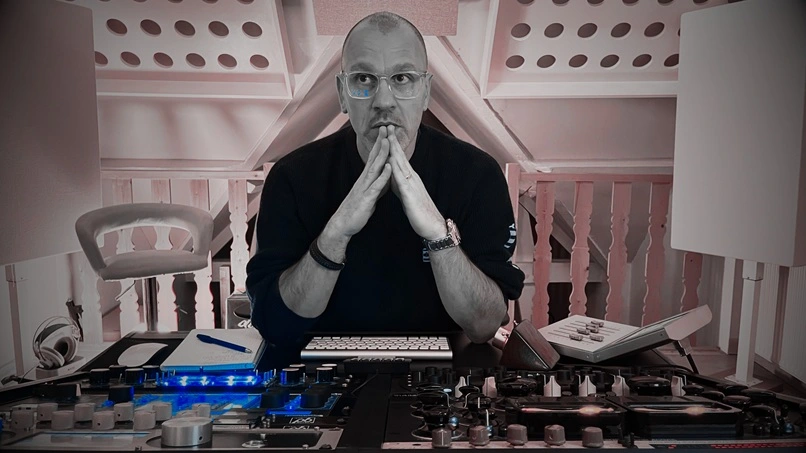
Artificial intelligence, no matter how advanced, possesses neither perception nor emotion. It does not recognize the sadness of a piano, the warmth of a bass, or the fragility of a voice in specific musical contexts. Nor can it instinctively highlight intimacy when a vocal struggles to settle within a tense musical environment.
Algorithms measure signals and apply calculations based on statistical data. However in a professional mastering session, feeling guides the engineer’s hand.
When Emotional Intention Guides Technical Choices
When listening to a track, the mastering engineer seeks to understand what the mix engineer and artist intended to express: softness, power, melancholy, energy, detail, subtlety, movement. Through carefully chosen tools, he shapes the sonic texture to make those emotions more legible. This analytical work—rooted in a sensitive relationship with the music—marks the beginning of a process designed to improve how the track’s key musical qualities are perceived.
Mastering, in this sense, is not a mere “optimization”—it is the illumination of musical emotion. This interpretive gesture requires an intimate knowledge of sound: understanding how a technical adjustment could enhance our emotional perception of a track.
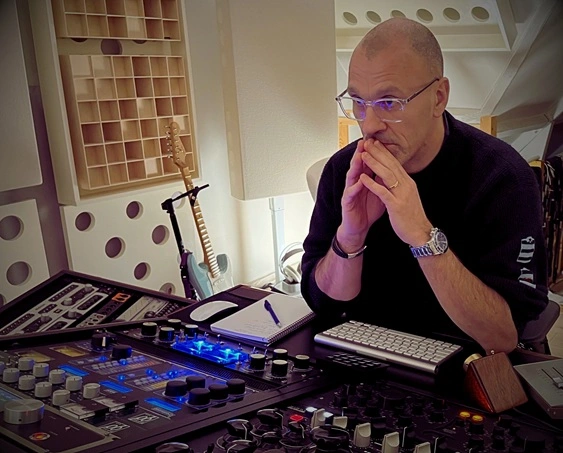
« Mastering is not only a series of signal processes — it is listening guided by emotion. »
— Alexis, Mastering Engineer
A slight reduction in the high end may soothe an overly bright song. A carefully calibrated compression can bring the listener closer to the singer in an elegant and natural way. These decisions are not mathematical—they are intentional, serving the emotional impact of the music.
This is why the human element remains irreplaceable. Mastering is not simply signal processing, nor is mastering a process applied arbitrarily. It is a sensitive reading of a musical piece of work. Without this dimension, only a compliant signal remains—balanced perhaps, but devoid of meaning.
II. Audio Mastering: Between Technical Objectivity and Human Subjectivity
The ability of a mastering engineer to combine analytical rigor with sensitive subjectivity is the foundation of professional mastering.
Objective Analysis: Positioning a Mix in Its Sonic Context
At a certain point, listening shifts from simple perception to evaluation. Strengths and weaknesses are assessed, mixes are compared within a project to ensure coherence, and references from the same musical genre are used to contextualize dynamics, frequency balance, clarity, and spatialization.
This analytical phase requires strict objectivity—a professional capacity to position a production within a competitive sonic landscape according to clearly identified aestetic standards. It allows the engineer to determine what can be improved — and importantly within which limits — assuming the engineer keep an eye on preserving the project’s identity. Or to reinforce it.
However, mastering does not stop at measurement and evaluation alone.
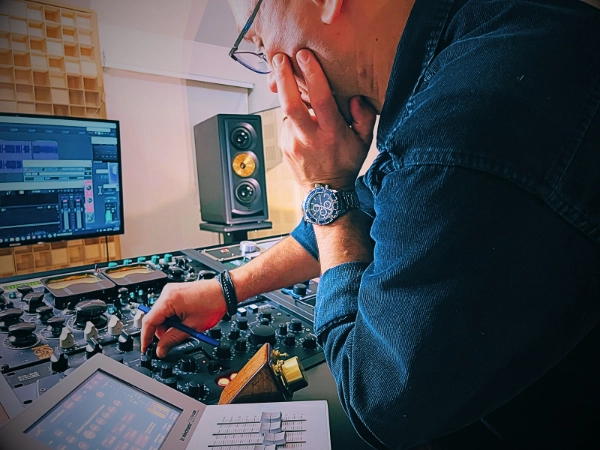
From Analysis to Intention: Envisioning the Sound and Acting on the Signal
The next step involves projecting the sound toward an intended direction. Based on his fresh defined working axes, the mastering engineer begins to act on the signal, constantly comparing the before and after states of each processing he makes.
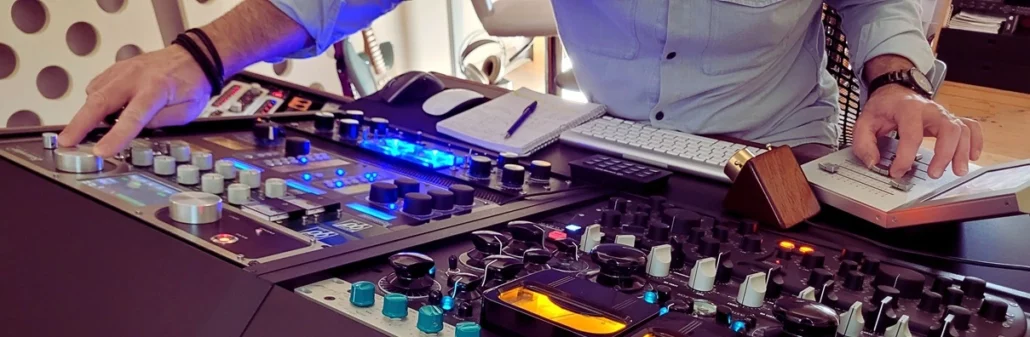
This stage may involve both digital tools and analog equipment. The latter remain particularly valued in mastering, as their electronic behavior can bring a sense of life and movement to the sound. They may sometimes yield unexpected yet musically relevant results, opening up new creative directions.
In this context, it is not uncommon to listen to a signal passing through a piece of equipment without having a precise objective — simply to observe what it reveals. When mastering in the analog domain, some electronic interactions between devices become meaningful, opening new creative and musical paths, thus enriching sonic possibilities.
« In professional mastering, the real challenge lies in finding the right combination of processes with the finest adjustment of all of their parameters. »
— Alexis, Mastering Engineer
Subjectivity, Instinct, and Sonic Taste: The Decisive Role of the Human Ear
Once the technical landmarks are established, the mastering engineer shifts into another mode: the instinctive listening. This is where subjectivity comes into play — a sense of sound shaped by years of listening, experimentation, and musical references.
The human ear does more than evaluate: it makes choices. These choices are sometimes intuitive, but they are always guided by a clear sonic objective. They may lead, for example, to making a track more open, less bright, denser or more spacious, in order to improve the articulation between its elements and the clarity of its musical intent.
These decisions emerge from the dialogue between the sound as it is perceived and the sound one aims to achieve after transformation. They arise from a sensitive relationship with sound which is unique to each engineer. Therefore they cannot be standardize.
Automated Mastering: Statistical Norms Versus Artistic Intention
Artificial intelligence is not capable to navigate this transition from measurement to intention. Its own “judgment” is based on statistical averages: on what thousands of “successful” tracks have in common. When you’re performaing an automanted mastering, the algorithm corrects your mix according to norms. This would never be close related to the authentic artistic choice.
Where the human seeks a sonic identity through professional Mastering services, the automated machine seeks conformity.
These “turnkey” tools reflect the same approach: predefined profiles based on strictly objective observations. As a result, they cannot account for the sensitive perception of artistic intention that a mastering engineer seeks to highlight.
Automated mastering Services and their Evolution
This algorithmic logic underpins many automated mastering services available online today that have emerged over the past decade. Platforms such as LANDR, active since 2014, or eMastered, launched in the mid-2010s, rely on engines capable of comparing a mix to vast databases of previously released reference tracks.
Established players in the professional audio industry have also explored this path. In 2021, the German company Plugin Alliance introduced an automated online mastering service via mastering.studio, which is no longer accessible today.
Interestingly, I found that most established automated mastering services now offer digital audio tools for purchase. This is actually a more honest way for everyone to prentend mastering one’s projects, as it permits users to take back control of their audio ! As the goal of any company is to earn profit, I’m a bit convinced that they couldn’t sell automated mastering services as much. Simple assumption.
Balance as the Intelligence of Human Mastering
It is precisely within the balance between objectivity and subjectivity that the true intelligence of human mastering resides. The engineer knows how to measure — but above all, he knows how to listen differently.
Mastering engineers navigate between rigor and instinct, science and emotion, in search of that fragile equilibrium where music becomes both competitive and personal.
« Entrusting your project to a mastering engineer means receiving far more than a balanced sound — it means receiving intention, sensitivity, and a unique vision that turns music into a living, emotional experience. »
— Alexis, Mastering Engineer
The mastering engineer compares, adjusts, but above all he interprets, taking into account the musical context and the intentions established during the mixing stage.
This human approach preserves the project’s sonic authenticity, something that automated mastering systems cannot ever replicate.
III. The Subtle Creativity of Human Mastering
« Throughout every technical stage involved in completing a master, everything comes down to a balance between creativity and subtlety. »
— Alexis, Mastering Engineer
A Discreet Form of Creativity in the Service of Emotion
Creativity in mastering is never overt. It does not draw attention to itself — it is felt.
The mastering engineer does not transform musical material; they reveal it. Unlike mixing, which requires a significant degree of creativity in the construction of a track, mastering focuses on bringing to light the sonic qualities already present in the recordings, much like a sculptor completing their work.
In this sense, the mastering gesture is closer to that of a sculptor than a painter: it refines, balances, and reveals hidden contours within a track, without ever altering its essence.
Many still imagine mastering as a purely corrective stage — a final adjustment, a simple technical “polish.” Yet behind precise settings, loudness references, and equalization curves lies a genuine act of interpretation — particularly in how equalization is conceived and finely balanced during mastering. This interpretation is based on an overall perception: understanding how each track breathes, what energy drives it, and what emotion it should convey once integrated into the whole of a project.

Examples of Creative Interventions in Mastering
In mastering, an infinite range of situations may arise, as the mixing stage places no limits on the artistic expression. In some cases, the goal may be to increase density in order to give a track more body and strengthen its foundation. In others, it may involve enhancing the sense of movement in the perceived dynamics when a mix lacks relief.
One may work on macrodynamics to make a project feel more cohesive, open up a mix by focusing on transient processing to bring out detail in areas that are significant within the artistic context, or intervene on microdynamics to improve the clarity of the choruses. Spatialization, clarity, and the articulation between instruments are also frequent areas to focus on.
At times, a slight coloration of the signal may be introduced to give it more meaning — making it feel less sterile and more embodied. There are as many creative possibilities as there are mixes to be mastered within a single project. None of these actions should ever be predefined; on the contrary, they must always be fully justified by the musical context and must be aligned with the project’s original intentions.
« No matter the method, a good master must never betray the intentions of the mix. It must remain fully aligned with the continuity of the mixing process. »
— Alexis, Mastering Engineer
Restraint as the Ultimate Form of Creativity
What the mastering engineer ultimately seeks is harmony between substance and form.
How can the softness of a track be preserved without making it dull? How can the power of a chorus be enhanced without crushing the dynamics of the rest of the song?
These decisions are not mathematical. They stem from taste, vision, and a confident hand that knows how far to go — and when to stop. In mastering, creativity often lies in restraint: in what one deliberately chooses not to do.
In professional mastering, every stage of signal processing involves very careful parameter adjustments, so that the sonic qualities of the signal are never compromised.
Each decision thus becomes an artistic choice in its own right. These subtle gestures shape the final color of a project, and it is often here that sonic identity finds its true meaning.
« In mastering, we distinguish two essential aspects in the way signal processing is applied to improve a mix. First, there is the selection and logical ordering of the processes themselves. And just as importantly, there is the precise adjustment of the parameters applied to those processes. »
— Alexis, Mastering Engineer
Artificial intelligence does not understand the nuance of almost. It adjusts a mix according to hundreds of optimized models, each calibrated within its own context. But it ignores the fragile balances between elements in a mix. It cannot perceive that fine boundary between “just a little more” and “already too much”. The boundary that separates a merely correct sound from one which is emotionally compelling, shaped with a fair and acurate adjustment of parameters.
The Conclusion Between Sensitivity and Creativity in Professional Mastering
In mastering, creativity doesn’t lie in transformation, but in critical evaluation and perceptual precision. This is a fundamental characteristic which belongs to Professional Audio Mastering.
It is an art of nuance — a form of writing sensitivity into sonic material.
A domain in which the human, through his ability to decide with emotion and discernment, remains irreplaceable.
IV. The Mastering Chain: A Sonic Signature Unique to Each Engineer
The authenticity of mastering lies in its ability to respect the identity of a track, rather than forcing it into a trend. From the perspective of the artist or mixing engineer, the mixes have already been approved by the label, the artist or the artistic direction. When the project is sent to mastering, the objective is clear: preserve all the strengths of the recordings — while revealing them more fully.
To achieve professional audio mastering, it is essential to work with an engineer who combines technical expertise with discernment, capable of shaping the signal in ways that enhance its sonic perception. Over the years, each mastering engineer develops a personal mastering chain within their very own studio, shaped by their choices of processors, preferences, and working philosophy.
The Mastering Chain as a Sonic Signature
This chain becomes deeply personal. The tools that compose it reflect the engineer’s sensitivity, and his approach to shape the sound. This is one of the reasons why two masters created from the same mix, in two different professional studios, will never sound exactly the same. Even if they both sound great.
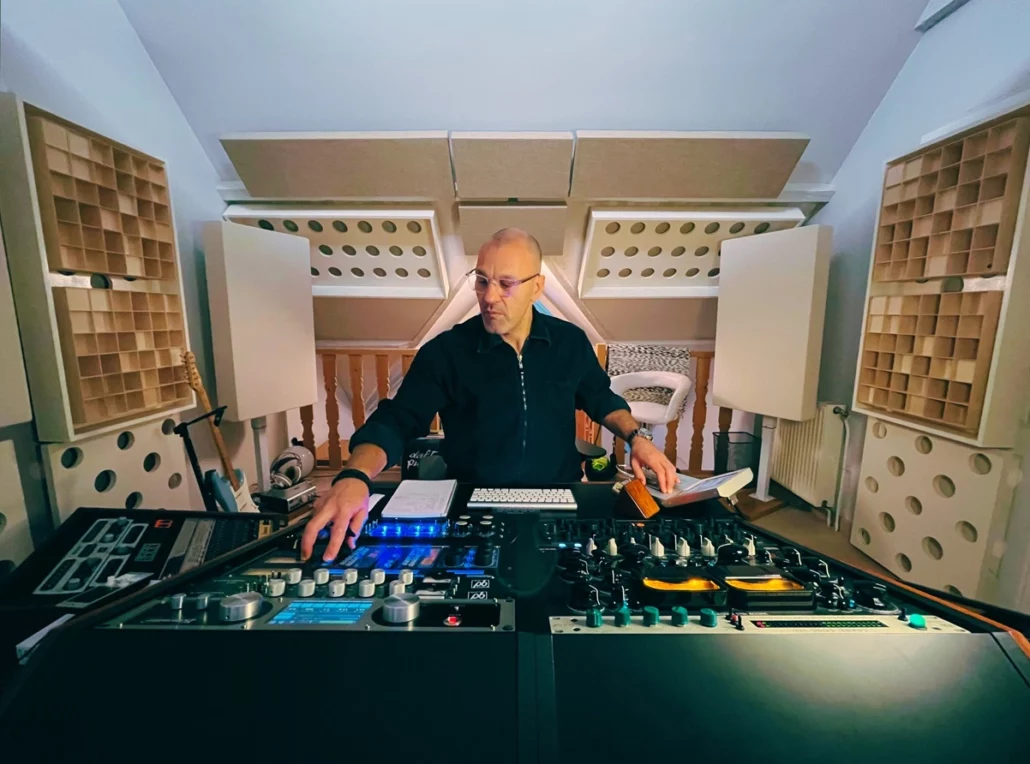
Each mastering engineer thus develops a true sonic voice, defined by its own character and sonic possibilities. This voice is expressed through the way the mastering chain is assembled, tested, refined, and reorganized over time. It is a carefully curated set of tools whose interactions are highly explored until a coherent and meaningful electronic alchemy emerges.
In the world of audio mastering, this chain is far more than a sequence of devices. It functions as a singular, almost organic instrument — translating the sensitivity of the person who uses it. Two engineers may deliver technically solid and coherent masters, yet their results can differ profoundly in their sonic identity.
Sound Craftsmanship and the Ongoing Evolution of Tools
By contrast, artificial intelligence contained in automated systems lacks all of these nuances. It has no taste, no preference, and no attachment to find the sonic alchemy. Its processing is reproducible, standardized, and norm-driven. It applies what it has learned from thousands of examples, without ever asking what a particular song truly deserves — or what it could become.
The mastering engineer, on the other hand, explores and experiments all the way. He searches for the right recipe based on intention and his mastering chain. And refines his parameters settings for the processors he is using. His chain evolves over time, shaped by new technical discoveries or technological inspirations.
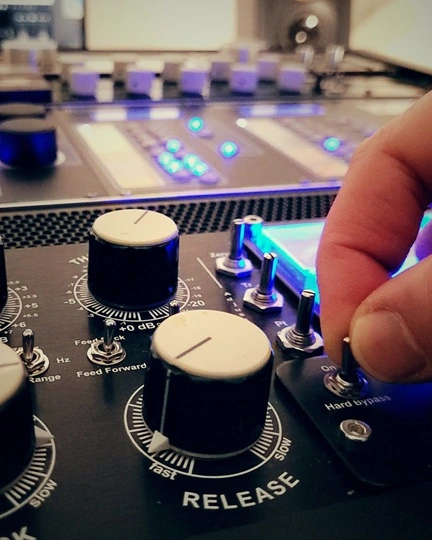
Be aware that technology evolves in all domains, not solely in digital audio. Every year we – mastering engineers- are happy to find analog gear which surpasses some others. Also of course classic sought-after gear means a lot for us. They offer strong and reliable options for pursuing our sonic goals.
We also value the ability to customize certain analog pieces of equipment. In professional mastering, electronic customization of analog gear is a well-established practice. It allows us to refine our tools as closely as possible to the sonic requirements we are pursuing. Some devices can be modified internally by specialists according to our specific needs and technical specifications, giving us even more precise ways to sculpt sound in line with our own need or taste.
We refine our craft as an artisan refines his tools, constantly striving to bring the sound we imagine closer to the sound we hear. This ongoing, deeply personal process is what gives human mastering its unique sonic identity.
V. Bespoke Mastering: Dialogue and Human Adaptation
Mastering as an Artistic Dialogue
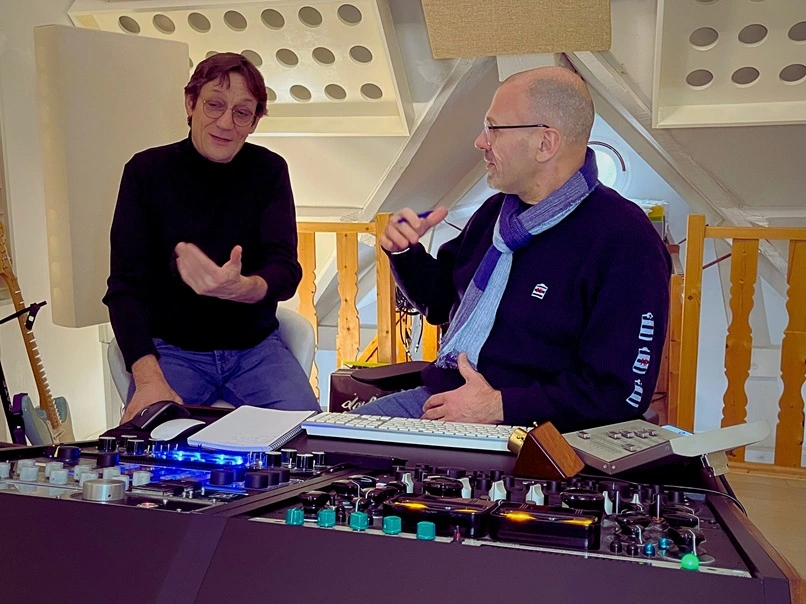
Mastering is not a fixed service — it is a conversation. Each project begins with listening: not only to the mix itself, but also to the artist’s discourse. Their intentions, doubts, references, and the way they describe what they want to feel — often more than what they want to hear.
Artificial intelligence can interpret parameters or instructions, but it cannot engage in dialogue. It responds to data; it does not ask questions. Human mastering, by contrast, is built upon this non-technical form of listening: understanding artistic intention and translating it into concrete sonic decisions.
Translating Human Intention into Sonic Choices
Each track tells a story, and each artist expresses that story differently. Some artists formulate much precise requests. Others speak in terms of sensations or pictures. The mastering engineer then acts as an interpreter between the artistic language that the artist needs to share and the technical language to translate one into the other.
This role naturally extends the mixing process. Just as the mixing engineer translates artistic intent through their tools, mastering continues this one work with a fresh perspective and critical distance — ensuring that the project reaches its final form with coherence and balance.
« If I had to summarize what mastering ultimately seeks to achieve, I would say this: we enhance the sonic rendering of a musical project to impact the listener in the most meaningful way possible, while remaining faithful to the commitments made during mixing. »
— Alexis, ingénieur du son en mastering analogique
This human relationship gives mastering a living, adaptable, and evolving dimension. It allows the engineer to aim for a result that feels right, but not for a “satisfactory average”. One result that reveals the potential of the music entrusted. And convey its essence with integrity.
VI. The Advisory and Educational Role of the Mastering Engineer
A skilled mastering engineer does more than simply “deliver a sound.” They accompany a musical work to ensure its longevity and relevance in the music market. A high-quality master helps a project stand the test of time, supports its distribution, and allows it to sit coherently within catalogs and playlists.
During the mastering process, the engineer also supports the artist’s artistic completion of the work. Through listening, discussion, and informed feedback, he contributes indirectly to the project’s positioning at release — both sonically and artistically.
Each project thus becomes an opportunity for knowledge exchange and experience transfer between a seasoned audio professional and a creator fully immersed in his art. This dimension is an integral part of professional mastering. Again, one more advantage that automated systems cannot replicate.
Mastering as Long-Term Artistic Support
Throughout the listening sessions and exchanges, the mastering engineer can share precise and reasoned advice. He clarifies uncertainties, propose alternatives, and explain why certain decisions are more appropriate than others within a given musical context.
In mastering — just as in mixing when sessions take place in a truly human framework — this communication plays a fundamental role. Then and further, it allows artists, producers, and mix engineers to step back, to better understand technical and aesthetic challenges, and refine their artistic vision for the next projects.
This dialogue often becomes a powerful catalyst for artistic maturity. Over time, artists develop a clearer sense of perspective, enabling them to approach subsequent productions with greater intention and coherence.
Transmission, Pedagogy, and Understanding the Craft
Artificial intelligence does not advise. It does not transmit knowledge, nor does it explain its decisions. It delivers a result without context or dialogue. There is no guidance nor explanation regarding any choices that were made.
« Today, it is rare to meet musicians who truly understand what mastering is. Most have a clearer idea of what mixing represents. I believe that automated mastering applications have largely trivialized a real profession. »
— Alexis, Mastering Engineer
By contrast, the mastering engineer acts as a true conduit of knowledge. He transforms audio mastering into a moment of artistic guidance and technical education. This human dimension enriches the creative experience and contributes to a deeper understanding of the roles involved in music production: recording, mixing and mastering. Particularly mastering, which is too often reduced to a purely technical final step.
VII. Fresh Ears and Intention in Mastering
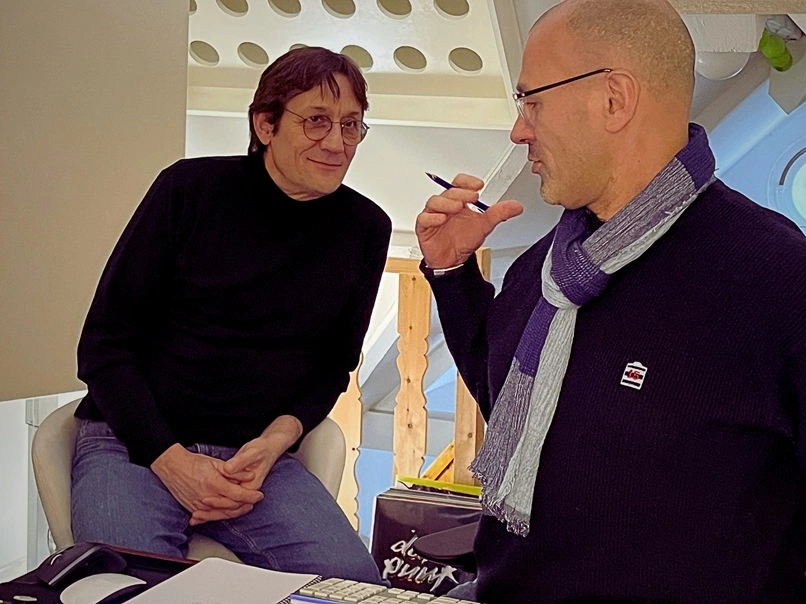
The mastering engineer approaches each new project with a form of curiosity: discovering a piece of music for the first time through a pair of fresh ears. This distance is essential for developing critical and objective listening, helping to make relevant decisions in signal processing.
Mixing a track often requires very long hours of focused work. For this reason it becomes essential to involve an external professional, who approaches the project free from prior context, history, or judgment.
He gradually uncovers the artistic intentions through careful listening and critical analysis. This position allows him to act with both objectivity and legitimacy — free from the habituation that naturally arises after repeated exposure. When necessary, this process is complemented by exchanges with the artist, producer, or mix engineer to validate certain technical or artistic orientations.
The Value of Fresh Ears
At first when receiving a mix, the mastering engineer does not seek to correct it, but he needs to understand it. He observes the relationship between the actual sonic presentation and the intentions established during mixing.
From this initial listening emerges his own mastering intention. A guiding thread that informs every subsequent decision. This step is foundational: it defines the direction of the whole mastering process.
Intention as the Guiding Force of Mastering
Mastering thus becomes a form of interpretation. It does not replace the mixer’s intention; it extends and completes it. Every process applied and every carefuly adjusted parameter reflect a sensitive reading of the music and a commitment to serving the track while preserving its balance and meaning.
Human intention cannot be programmed. It arises from an emotional response, a moment of listening, a deep conviction that “this is how the track should sound.” It is this instinctive, human, and artistically responsible dimension that gives mastering its true meaning.

« Regardless of the musical genre, mastering is a sensitive and musical form of interpretation, in continuity with the mix. »
— Alexis, ingénieur du son en mastering analogique
VIII. Emotion in Mastering: What Artificial Intelligence Cannot Feel
At the heart of every mastering process lies a simple truth: music resonates because it is felt.
Emotional Perception as the Foundation of Mastering
The mastering engineer acts as an emotional compass, perceiving the nuances, tensions, and fragilities inherent in each piece of music. Every technical decision — whether related to a specific process or a parameter adjustment — emerges from a felt response. None of them ever arises from a purely statistical formula.
Human Decision-making and Adaptability Versus Algorithms
Artificial intelligence can analyze and correct a signal based on database-driven models, comparing parameters such as frequency balance, dynamics, or stereo imaging. But it cannot feel.
Unlike an algorithmic approach built around fixed decisions, the mastering engineer can revisit choices, reassess treatments, and evolve his decisions over time. He is guided by attention and dialogue with the artist, mixer or producer.
Artificial intelligence does not perceive the shiver in a voice, the warmth of a piano, or the delicate balance between musical elements within a track. Its action remains mechanical, confined to norms and averaged calculations.
Human mastering, by contrast, transforms signal into emotion. It translates music so that it resonates with listeners — while respecting artistic intention and maintaining the coherence of a project that, through this process, finds its true purpose.
« Mastering enhances the sonic rendering of music thanks to meticulous technical work, specifically adapted to each track of a project, built around our own sensitivity in respect to the mix’s identity. »
— Alexis, Mastering Engineer
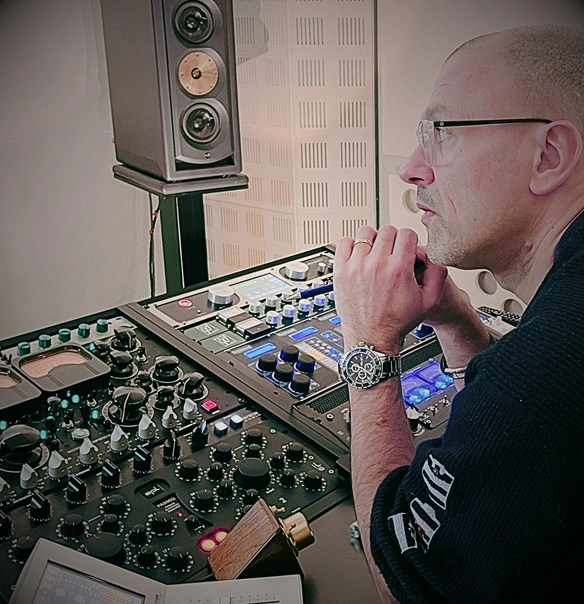
Conclusion — Human Mastering as the Guardian of Authenticity
Professional mastering goes far beyond measurable technical criteria. It relies on a human form of listening. One that is capable of understanding, interpreting, and ultimately serving a musical work.
Its authenticity lies in a sensitive relationship with music. After an initial phase of objective listening, approached with fresh ears and critical distance, the process naturally gives way to emotional listening. This stage is grounded in a deep understanding of artistic intentions and sustained through genuine dialogue with the artist.
Where artificial intelligence applies statistical averages by comparing predefined models, the mastering engineer interprets a singular work with perspective, sensitivity, and discernment.
This authenticity cannot be measured—it can only be felt. It emerges from experience, musical culture, conscious decision-making, and the ability to preserve the sonic identity of a project without formatting it. As long as music remains a language of transmission and emotion, mastering will remain a profoundly human act—guided by conscious listening, sensitivity, and feeling rather than algorithms.
Key Takeaways — Human Mastering vs Automated Mastering
- Automated mastering analyzes data and applies averages, but it cannot interpret a musical work nor reveal its authenticity.
- Professional mastering goes beyond technical normalization: it is rooted in listening, human sensitivity, and artistic intention.
- A mastering engineer approaches each project with fresh ears and expertise shaped by experience.
- Over the years, each mastering engineer develops a personal processing chain that becomes a true sonic signature.
- From this chain, the engineer derives a unique approach for each track, allowing the sound to be enhanced with precision and relevance, ultimately shaping the sonic identity of the project.
- Dialogue, adaptability, and human judgment make professional mastering impossible to automate.
- Every decision made during a mastering session is adaptive and evolving, opposed to fixed automated solutions.
- Professional mastering helps ensure the longevity of a musical project and enhances the artist’s value.
References and Additional Resources
To further explore some of the concepts discussed in this article—such as a complete definition of mastering and its goals, the difference between mixing and mastering, the importance of the specific mindset in mastering in accordance with dedicated logic, the choice and amount of processing being involved, or simply what is considered to be a professional mastering chain—you may consult the FAQ section. Some blog articles will explore these topics in greater depth so stay tuned !
For a deeper understanding of signal level management during the mastering stage, I also recommend reading the article dedicated to True Peak levels in mastering.
Finally, if you are interested in the broader worlds of mastering and audio culture, you may explore my curated selection of essential reference books on mastering, mixing, and audio culture. Each one of these books is presented in detail on the blog page.
For your music projects, you are welcome to get in touch to discuss my professional mastering services.